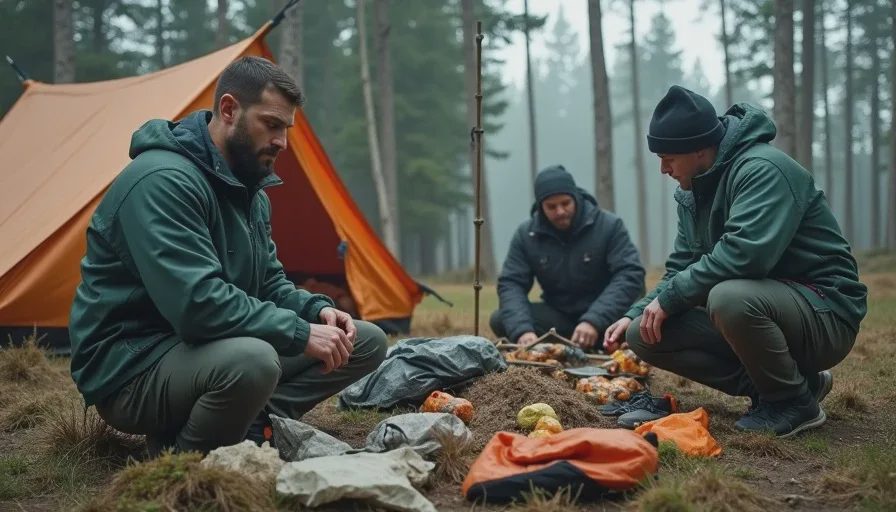
Solo vs. Co-op Openers: Your First-Day Plan Should Not Be the Same
A first-day plan that works well for a solo run often creates problems in co-op, and a co-op plan can leave a solo player overexposed or under-supplied. The number of players changes what can be parallelized, how much risk is acceptable, and which systems must be locked down first. This guide separates the two openers so the first hours match the actual group size instead of forcing one template onto both.
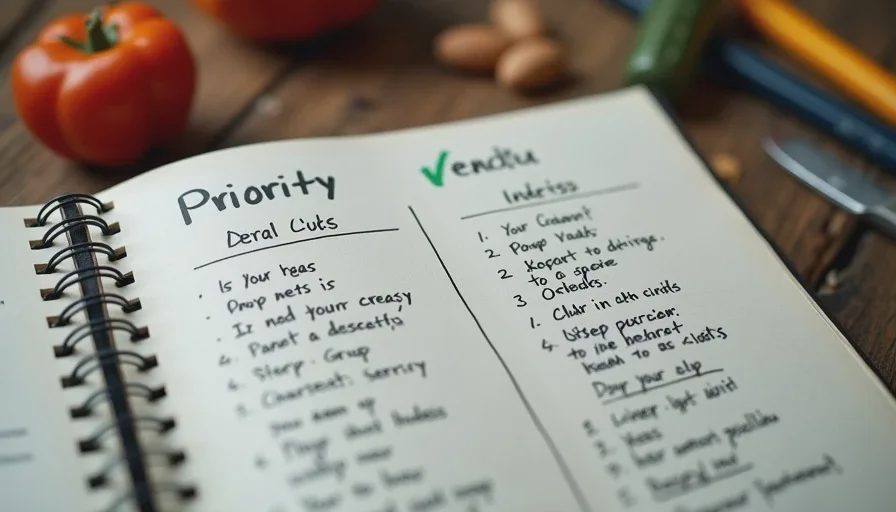
I still write two short versions of the opening checklist in the notebook—one for solo, one for co-op. The core survival goals stay related. The sequence and the division of labor do not.
Shared Goals, Different Execution
Both solo and co-op openers aim at the same outcomes by the end of the first major session:
A functional minimum shelter that handles the early threat cycle.
A repeatable food and recovery method.
A short core resource loop that feeds the next crafts.
Basic tools that remove the first gathering bottlenecks.
The difference lies in how those outcomes are reached, how much can be done in parallel, and how failure is absorbed.
Solo Opener: Sequential and Conservative
In solo play every system depends on one person. The plan must be sequential and the risk tolerance lower.
Typical solo first-day priorities in order:
Secure the minimum tools required to gather the primary materials.
Establish a minimum shelter that can be closed quickly.
Lock a short, safe food and recovery loop.
Run a tight core resource circuit close to the shelter.
Only then consider limited exploration or a single targeted upgrade.
Because there is no partner to hold a position, revive, or continue a loop, exposure time is more expensive. Long scouting trips or ambitious building projects in the first hours create single points of failure. The solo opener favors tight geography, early defensive closure, and deliberate pacing.
Inventory discipline is also stricter. Every slot and every weight unit competes with the next required material. Selective gathering is not optional; it is the only way to keep the loops moving without constant sorting.
Co-op Opener: Parallel and Coordinated
Co-op changes the math. Multiple players can advance different systems at the same time, but only if they share a plan. Without coordination, the extra bodies simply multiply the usual early mistakes.
Effective co-op first-day structure:
Agree on one starter location before major building begins.
Assign loose ownership of the critical early systems (shelter/tools, food loop, core materials).
Maintain a single short shared priority list visible to everyone.
Establish basic shared storage rules early so materials remain findable.
Keep the first base compact; expand only after the core loops are stable.
Parallel work is the advantage. One player can finish the minimum shelter while another secures food and a third begins the resource circuit. The risk is fragmentation: three incomplete projects and no finished survival foundation. Clear ownership and a shared list convert the extra labor into speed instead of chaos.
Risk Tolerance and Death Cost
Death and recovery cost differently in the two modes.
In solo, a death often means a long walk back, potential gear loss, and a complete pause in all progress. Early risk decisions stay conservative. The first threat cycle is respected; unnecessary fights and distant nodes wait.
In co-op, a single death is recoverable if the remaining players can hold the situation and retrieve gear. This allows slightly higher early risk—faster exploration of a key node, a more aggressive resource push—provided the group has an explicit recovery agreement. Without that agreement, co-op deaths still cascade into wipes or scattered gear.
The opener should reflect the actual recovery capacity. Solo plans assume low tolerance. Co-op plans can accept controlled risk only when retrieval and roles are already clear.
Base and Storage Decisions
Base choices also diverge.
Solo starter bases optimize for short personal loops and easy defensive closure. Internal layout favors one person’s movement patterns. Storage can be simpler because only one player deposits and withdraws.
Co-op starter bases must support multiple people moving at once and multiple simultaneous deposits. Slightly wider primary paths, clearer zoning of storage, and an early agreement on what belongs in which container prevent the junk-drawer problem that appears when four players dump mixed loads into the same chests. The location itself still follows the same filters (resource distance, defensive simplicity, expansion room), but the internal plan accounts for concurrent use.
Exploration Timing
Solo exploration in the first day is usually limited to what directly supports the core loops or the next necessary craft. Information gathering beyond that window is deferred until the foundation is stable.
Co-op can afford a dedicated scout earlier, provided the other players keep the survival systems advancing and the scout has a clear objective and return plan. Uncoordinated multi-player exploration simply multiplies exposure without multiplying useful information.
Adjusting Mid-Session
Both openers benefit from a short midpoint check.
Solo: pause, confirm that shelter, food, and the core loop are actually functional, then decide whether the remaining time goes to tightening those systems or to one limited expansion.
Co-op: brief group check against the shared list. Reassign roles if one system is lagging. Confirm that storage is still usable. Decide together whether to keep pushing the current priorities or to lock what exists and stop.
These checks prevent the common late-session drift where fatigue turns a solid opening into scattered, low-value activity.
Common Cross-Contamination Mistakes
Players often carry the wrong template into the wrong mode:
Running a solo-style sequential plan in co-op and leaving two players idle or duplicating work.
Running a co-op-style parallel ambition as a solo player and overextending into multiple incomplete systems.
Using solo inventory habits in co-op and creating shared storage chaos.
Using co-op risk tolerance as a solo player and taking deaths that fully reset momentum.
Matching the plan to the actual number of players removes most of these mismatches.
A Practical Side-by-Side Starting Sequence
Solo first hours (compressed):
Tools → minimum shelter → food loop → core resource circuit → midpoint check → limited next step.
Co-op first hours (compressed):
Agree location and shared list → assign systems → parallel execution of shelter/tools, food, and core materials → early storage rules → midpoint group check → coordinated next step.
The outcomes look similar on paper. The path and the failure modes do not.
Final Notes on First-Day Planning
Solo and co-op openers share the same end goals of shelter, food stability, and a working resource loop. They diverge in sequence, risk, labor division, storage design, and exploration timing. Forcing one plan onto both situations creates unnecessary friction—either idle players and duplicated effort, or a single player stretched across too many incomplete systems.
Write the opener for the number of people who will actually be present. Keep the solo version sequential and conservative. Keep the co-op version parallel and coordinated. Re-check at the midpoint. The first day then builds a foundation that matches the run instead of fighting it.
Build what keeps you alive first. Let the first-day plan respect whether you are keeping one person alive or several.
No letters yet.