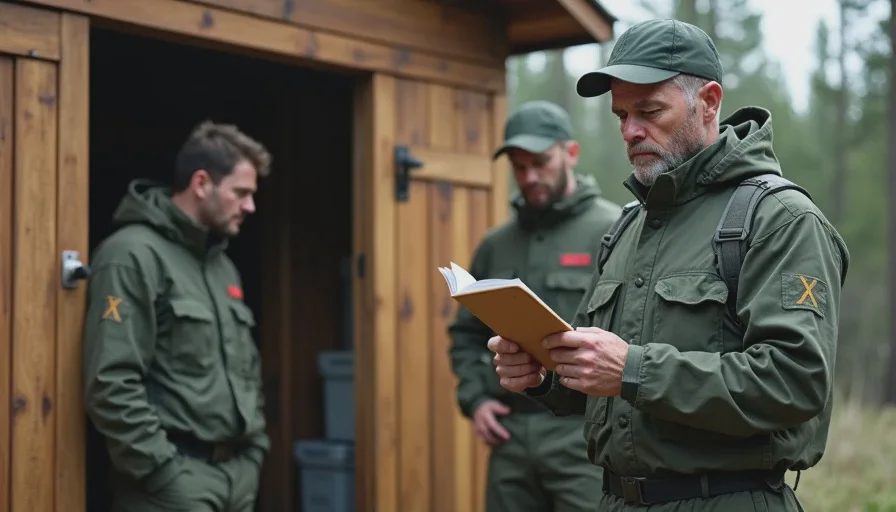
Co-op survival crafting runs fail for different reasons than solo ones. The presence of extra players creates new ways to waste time, split focus, and turn a stable opening into a midgame collapse. This post covers seven early-game mistakes I still see regularly in co-op worlds across titles like Valheim, V Rising, Enshrouded, Sons of the Forest, and similar games. The goal is not to assign blame. It is to name the patterns so groups can catch them before the damage compounds.
I have been the player who caused several of these and the player who had to help clean them up. The notebook entries from those runs are still useful.
Mistake 1: No Shared Priority List
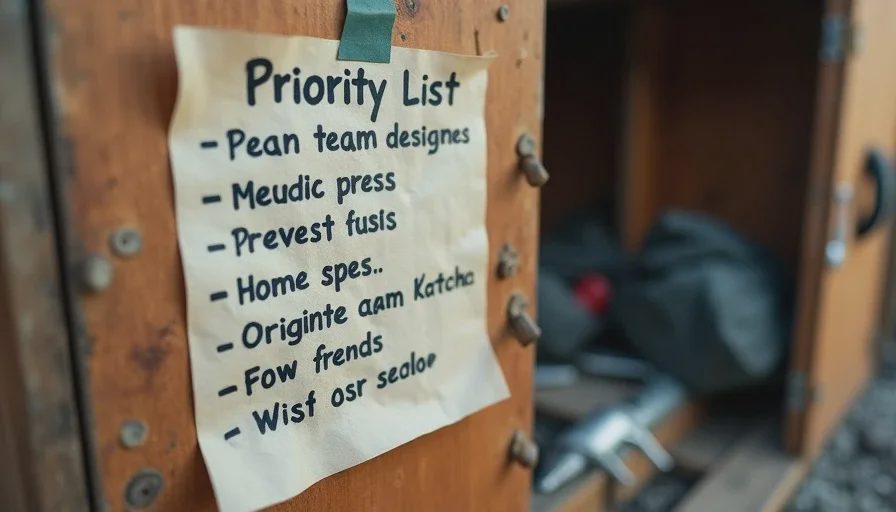
The most frequent early failure is the absence of a single, short priority list that everyone accepts. Each player invents their own “next important thing.” One starts a decorative wall, another chases a distant node, a third begins an advanced station whose materials are not yet in supply. The base looks busy while the actual survival and progression needs stay unmet.
A shared list does not need to be long. Three to five ranked items for the current hour is enough. When the list is visible and agreed upon, duplicated effort drops and the group moves in the same direction. Without it, co-op simply multiplies the usual solo mistakes.
Mistake 2: Building Multiple Incomplete Bases
Excitement in the first session often produces two or three half-built shelters in different locations. Each player claims a spot, places a few walls or a workbench, then abandons it when the group decides to move. The result is scattered materials, split storage, and no single defensible point when the first real threat arrives.
The practical rule is simple: agree on one starter location using the same filters used in solo play (resource loop distance, defensive simplicity, expansion room). Secondary outposts come later, after the main node is stable. Early multiplication of bases almost always costs more time than it saves.
Mistake 3: Ignoring Role Clarity in the First Hours
Co-op groups frequently treat the opening hours as free-for-all exploration. Everyone gathers whatever they see, crafts whatever they feel like, and assumes the others are covering the gaps. Food meters drop, basic defense is missing, and the core resource loop never stabilizes because no one owns it.
Assigning loose roles for the first session prevents most of this. One player can lock the minimum shelter and basic tools. Another can establish the food and water circuit. A third can run the core materials loop. Roles can rotate later. The important part is that the critical early systems have an owner instead of relying on hope.
Mistake 4: Shared Storage That Becomes a Junk Drawer
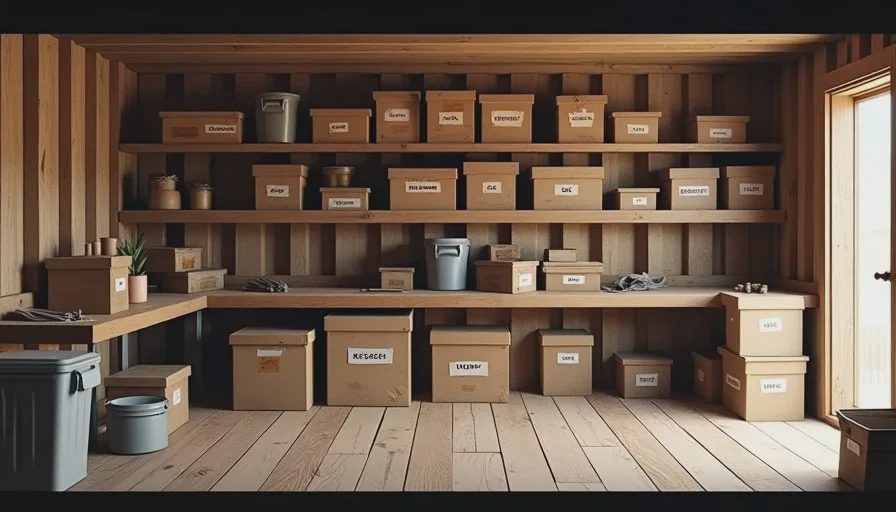
Open shared chests without any sorting agreement turn into black holes. Players dump everything, then spend minutes digging for the one material needed for the next craft. The problem grows with every additional player.
A basic early system is enough: one chest or section for core building materials, one for food and recovery items, one for tools and components, and a temporary dump that gets cleared regularly. The exact labels matter less than the existence of a rule the group actually follows. Clean storage multiplies the value of every resource loop the group runs.
Mistake 5: Expanding the Base Before the Economy Is Stable
Groups often start adding rooms, decorative walls, or secondary crafting areas while the core resource loops and food stability are still unreliable. The extra building consumes materials and attention that should still be going into the loops that keep the run alive.
The better sequence is the same one used in solo play: stabilize tools, minimum shelter, food and water, and the core resource circuit first. Only then expand the footprint. A larger base with empty storage and missing basic supplies is a liability, not progress.
Mistake 6: Treating Every Player’s Death as an Individual Problem
In co-op, a downed or dead player is a group event. Gear is on the ground, the remaining players are under strength, and the threat that caused the death is often still present. Groups that treat recovery as the dead player’s personal job frequently lose more people or more gear in the attempt.
A simple recovery rule helps: the group decides together whether the gear is worth an immediate push or whether it is safer to regroup, re-gear from storage, and return later. Ego recoveries under pressure are a reliable way to turn one death into a wipe.
Mistake 7: Chasing Midgame Goals in the Early Game
Once the first night is survived, many groups immediately pivot to a distant boss, a high-tier material, or a large building project. The early economy is not ready to support the trip or the craft, so the group returns depleted, under-geared, or missing the basic supplies needed to recover.
The notebook priority list is the corrective tool. If the current top items are still early-game stability and core loops, the distant objective stays off the list. Midgame goals become appropriate when the group can leave the base for an extended period and still return to a functional, supplied node.
How These Mistakes Interact
The seven patterns rarely appear in isolation. No shared priority list leads to multiple incomplete bases. Unclear roles produce junk storage. Premature expansion happens because the group never stabilized the loops. Each mistake makes the next one more likely.
The reverse is also true. Catching any two or three of them early reduces the pressure that creates the others. Groups that install a short shared list, pick one starter location, and assign loose first-session roles already avoid the majority of the damage.
Practical Recovery When the Mistakes Have Already Happened
If a run is already showing several of these problems, the fix is usually not a full restart. It is a deliberate reset of the early systems:
Call a short group stop and write one shared priority list for the next hour.
Choose a single primary base location and move essential stations and storage there.
Clear and sort the main storage so materials are findable.
Re-assign temporary roles for the core loops and food stability.
Defer all midgame objectives until the above are stable.
This sequence is faster than continuing to push forward on a broken foundation. Most co-op runs that recover do so by returning to these basics rather than by forcing the next big objective.
Solo Habits That Still Apply in Co-op
The individual disciplines from solo play remain useful. Each player still benefits from ranking their own crafts, keeping personal inventory tight, and knowing the current shared list. Co-op does not remove the need for personal clarity; it adds a layer of group clarity on top.
The notebook habit scales well. One shared page or a pinned note for the group priority list, plus individual short lists for personal crafts, keeps the information visible without constant discussion.
Final Notes on Co-op Early Game
Co-op multiplies both efficiency and confusion. The same early hours that can produce a strong shared foundation can also produce scattered bases, empty food stores, and a group that is busy without being effective. The seven mistakes above are the patterns that appear most often when groups skip the basic coordination steps.
A short shared priority list, one starter location, clear early roles, sorted storage, delayed expansion, deliberate death recovery, and resistance to premature midgame goals remove most of the unnecessary friction. The game remains hard. The group no longer makes it harder than it needs to be.
Build what keeps you alive first. In co-op that work includes the systems that keep the whole group aligned while you do it.
No letters yet.