
A survival base can have strong walls, good crafting stations, and reliable resource loops and still feel broken if the storage is a single chaotic pile. Time disappears into searching for one required material while everything else sits in mixed heaps. This guide outlines a storage system that stays usable from the early hours through midgame without requiring constant full redesigns.
I treat storage the same way I used to treat warehouse staging locations: every item should have a known home, and the path from deposit to that home should stay short. The notebook gets a short zoning note whenever the system expands.
Why Storage Collapses into a Junk Drawer
Several habits reliably produce the problem:
Every returning player dumps the entire inventory into the nearest open container.
New materials appear faster than categories are defined.
Temporary “just put it here for now” chests become permanent mixed storage.
Co-op groups never agree on what belongs where, so every chest becomes everyone’s overflow.
Expansion of the base adds more containers without adding more rules.
The result is the familiar cycle of digging, reshuffling, and eventually declaring a full storage clean-out that consumes an entire session.
Core Principles of a Usable System
A storage system that survives contact with real play follows a few consistent principles.
1. Zone by Use, Not Only by Material Type
Broad material categories (wood, stone, metal) are useful, but the highest-frequency items need forward positions near the stations that consume them. Zoning by use—core building inputs, processing inputs, food and recovery, tools and components, bulk overflow—keeps daily movement short even when the total number of items grows.
2. Make the Deposit Path Obvious
Players (including future-you) will follow the path of least resistance. If the first chest by the entrance is an unlabeled dump, it will become the junk drawer. A clearly designated intake or sorting point, followed by short walks to the correct zone, reduces the volume of misdeposits.
3. Separate Active Supply from Bulk Reserve
The containers closest to crafting stations should hold working quantities of the materials currently in use. Bulk stockpiles of the same materials can sit farther back or in a secondary room. This keeps the active crafting loop fast without forcing every stack to live in the high-traffic zone.
4. Keep the Rules Lightweight Enough That People Follow Them
An overly detailed system that requires constant decisions will be ignored. A small number of clear zones plus one overflow rule is more durable than a perfect taxonomy that no one maintains.
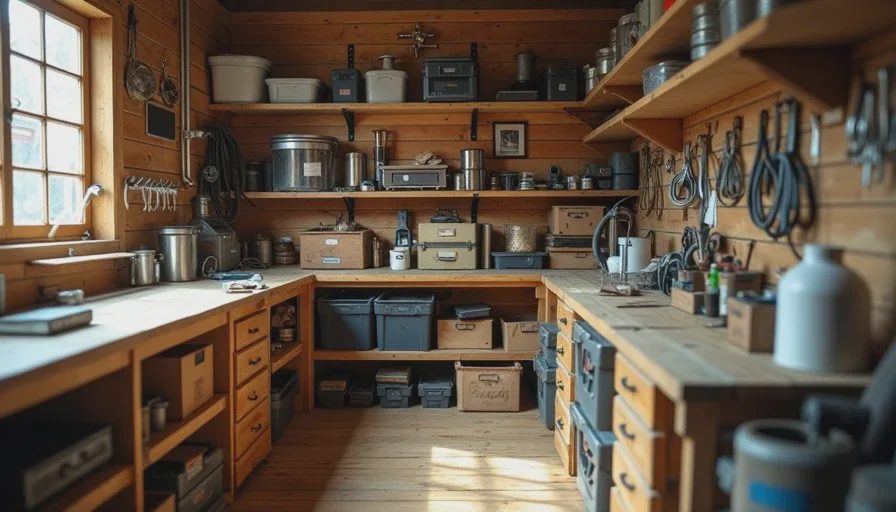
A Practical Early-to-Midgame Zoning Layout
A workable starting structure looks like this:
Intake / Sort Point: One or two chests near the main entrance for unsorted returns. These are emptied regularly into the correct zones.
Core Building Zone: Primary structural materials and the items used in the most frequent building tasks, placed close to the main exit or building staging area.
Processing Zone: Inputs and outputs for the main crafting and refining stations, clustered with those stations.
Food and Recovery Zone: All items related to hunger, thirst, healing, and buffs, kept together and easy to reach before leaving the base.
Tools and Components Zone: Spare tools, upgrade parts, and mid-tier components that are not bulk materials.
Bulk / Overflow Zone: Excess stacks and lower-priority materials that do not need to sit in the active loop.
This layout can start very small—literally a few containers—and expand by adding capacity inside existing zones rather than inventing new categories for every new item.
Deposit and Maintenance Rules That Stick
Rules only help if they are simple enough to become automatic.
Useful minimum rules:
Everything coming back from a run lands first in the intake point, not in random chests.
Intake is cleared into the correct zones at the end of a session or whenever it starts to fill.
Active-zone containers are topped up from bulk when they run low; they are not used as general overflow.
When a new material becomes high-frequency, it receives a forward position in the relevant zone instead of staying in bulk.
In solo play these rules are personal habits. In co-op they need to be stated once and reinforced lightly when someone defaults to the old dump-and-forget pattern.
Handling the Arrival of New Materials
New biomes and new progression tiers constantly introduce unfamiliar items. The system absorbs them without collapsing if two habits are in place:
New items default to the intake or bulk zone until their usage frequency is clear.
Once an item is being used regularly in crafting or building, it is given a dedicated spot in the appropriate active zone.
This prevents the common failure mode where every new material immediately receives its own special chest, fragmenting the layout, or where every new material is simply dropped into the nearest mixed container.
Solo Versus Co-op Adjustments
Solo storage can be more compact and more personalized. The player learns their own patterns and can keep active quantities very tight. The main risk is letting temporary piles become permanent because “I know where I put it.”
Co-op storage must survive multiple independent deposit habits. Clear zone labels (even simple visual markers), a single agreed intake point, and occasional group clean-ups keep the system coherent. Without those, each additional player increases the speed at which order decays. Role ownership can help: one player can be responsible for final sorting of the intake at the end of a session while others focus on different systems.
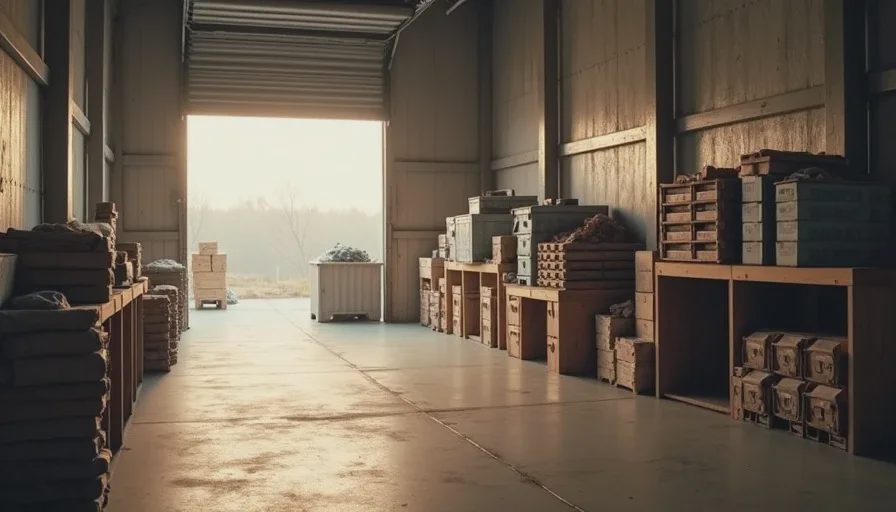
Signs That the System Needs Attention
Certain signals indicate that storage is drifting back toward a junk drawer:
Players regularly ask where a common material is.
Crafting stops while someone searches multiple chests for one input.
The intake point is overflowing and has not been cleared in several sessions.
Active-zone containers contain large amounts of unrelated items.
New containers are being added without any zone assignment.
Any of these is a prompt to pause, clear the intake, and restore the active zones. A short maintenance pass is cheaper than a full storage redesign later.
Expanding the System Without Losing Control
As the base grows, the same zoning logic scales. Additional rooms or floors can repeat the pattern: active supply near the stations that need it, bulk farther away, clear intake paths. Specialized zones (for example, a dedicated area for a high-volume midgame material) can be added when the volume justifies it. The key is that expansion follows use rather than preceding it.
Portals, carts, or other logistics tools later make bulk-to-active restocking faster, but they do not replace the need for the zones themselves. Logistics move material; zoning decides where it belongs.
Final Notes on Storage That Stays Usable
A survival base turns into a junk drawer when deposit is easier than organization and when no light rules exist to reverse the drift. A simple system of use-based zones, an obvious intake point, separation of active supply from bulk, and minimal maintenance habits keeps materials findable and resource loops fast.
Start small. Define only the zones that the current stage of the run actually needs. Enforce the deposit path lightly but consistently. Expand capacity inside the existing logic instead of inventing new chaos. The time saved on every future crafting session is the return on that early discipline.
Build what keeps you alive first. Keep the materials that support that work in places you can actually find them.
No letters yet.