If you are looking for the enshrouded best build for solo new player progression, start with a durable melee setup instead of chasing a complicated damage formula. Solo Enshrouded punishes fragile characters because every mistake costs time, food, durability, and sometimes a long corpse run. Your first build should let you survive close combat, carry a useful amount of gear, and handle exploration before specialized equipment becomes available.
My recommendation is a beginner-friendly warrior build with a small amount of ranged support. Put early skill points into health, stamina, survivability, and the melee path. Use a bow when you need to pull one enemy or soften a dangerous target, but do not build your whole character around perfect headshots. Build what keeps you alive first.
The best starting direction for solo players
The strongest early foundation is a one-handed weapon and shield, backed by a reliable melee weapon that matches the gear you find. A shield gives you room to learn enemy attack patterns, block incoming hits, and recover from an imperfect dodge. Two-handed weapons can hit harder, but their slower recovery makes early mistakes more expensive.
Prioritize skill nodes that improve maximum health, stamina, melee damage, and general survivability. Stamina matters more than new players expect. It powers attacks, dodges, climbing, and other movement actions, so running empty in a ruin can leave you unable to block or escape. A small damage increase is not worth much if your character cannot perform one more dodge.
The enshrouded best build for solo new player play is not a permanent class decision. Enshrouded lets you respec skill points at the Flame Altar for a resource cost, so treat the early tree as a working setup. You can shift toward ranger, wizard, or a heavier tank style after you understand your preferred weapons.
Skill order for the first several hours
During the opening stretch, spend points in the central survival options and the warrior side of the tree. Take health and stamina improvements first, then choose weapon or damage nodes that fit the equipment you actually own. Do not spend every point immediately. Holding a few points lets you test a newly discovered weapon before committing to a branch.
After your basic durability is in place, improve critical hit or weapon-specific options if you consistently use that weapon type. If you find yourself fighting from a distance, add ranger skills later rather than abandoning melee entirely. A bow is excellent for pulling isolated enemies, attacking flying targets, and starting encounters on your terms. It is less dependable when three enemies are already inside your personal space.
Magic can wait. Intelligence-based builds become more attractive once you have better spell access, stronger gear, and enough resources to support the setup. Early solo players usually benefit more from a dependable block, a bigger health pool, and stamina that does not disappear after two attacks.
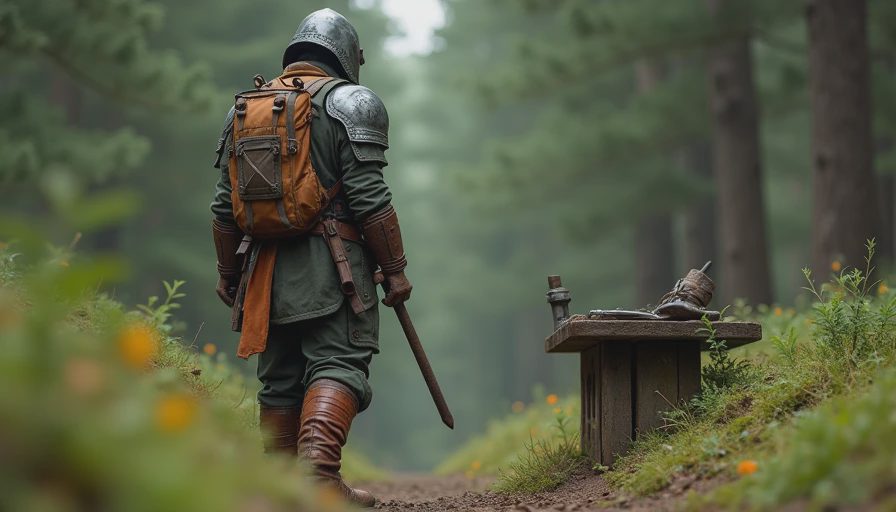
Gear, food, and combat habits
Use the best weapon you can maintain, not the weapon with the most impressive level requirement. Upgrade or replace gear when the damage difference is meaningful, but do not stop exploring for a perfect set. Enshrouded rewards steady progression, and early crafting materials are better spent on a serviceable weapon than on a decorative room.
Carry food that supports your current plan. Constitution-focused foods are useful when you are learning enemy timing, while stamina or damage foods help once you can avoid regular hits. Keep healing items on a quick slot and refill them before leaving your base. Running into a landmark with an empty healing supply is how a ten-minute trip becomes a forty-minute recovery job.
Fight near open ground whenever possible. Narrow doorways, stairs, and cluttered rooms make it difficult to read attacks. Pull one enemy away from a group, block the first strike, and punish the recovery window. Against tougher enemies, patience beats button mashing. Two safe hits followed by a reset will carry you farther than a reckless combo.
The enshrouded best build for solo new player combat also depends on movement. Learn when to dodge through an attack, when to block, and when to simply back away. Do not burn all stamina climbing or sprinting before a major fight. Good bases solve tomorrow’s problem early, and good combat habits prevent today’s corpse run.
Base placement and crafting priorities
Place your first serious base close enough to useful resources and early quest routes that returning home does not become a daily chore. You want a clear approach, room for crafting stations, and enough flat ground to expand. A beautiful cliff house with no practical route to materials is a luxury item, not a survival item.
Build a simple production loop. Put storage beside the stations you use most, leave space for additional crafting stations, and create separate chests for wood, stone, metals, food, and finished gear. Labeling can wait, but sorting by category saves real time once the Carpenter, Blacksmith, Hunter, and other survivors begin unlocking recipes.
Prioritize the Flame Altar, shelter, basic storage, a bed, and crafting access before walls, towers, or elaborate furniture. Increase the Flame level when you have the required materials and can safely reach the next areas. The altar is not just decoration; it supports progression and helps turn your base into a dependable reset point.
Exploration route and progression mistakes
Do not sprint into every nearby landmark because the map shows it. Follow quests that unlock survivors and crafting stations, gather materials along the route, and return before your inventory becomes a mess. The enshrouded best build for solo new player progression is tied to preparation as much as skill points, so bring food, healing items, a spare weapon when practical, and enough inventory space for unexpected materials.
Keep an eye on Shroud exposure and the time available in dangerous areas. Carry the tools needed for quick gathering, but avoid turning every trip into a full harvest run. One focused outing for ore, one for wood, and one for quest progression is easier to manage than a wandering expedition that ends with a full bag and no clear objective.
A common mistake is upgrading the base too quickly while ignoring equipment. Another is hoarding every rare material forever. Use resources on tools and weapons that improve the next expedition. You can gather more later; you cannot recover hours wasted fighting enemies with an outdated weapon.

When to respec into a specialist build
Stay with the beginner warrior setup until combat feels predictable and you have opened enough of the map to identify your preferred role. If you enjoy bow combat, respec toward ranger skills and keep a melee weapon as an emergency option. If you prefer spells, move into the wizard path after your spell supply and gear can support it. If you want maximum toughness, continue down the warrior and tank-oriented branches.
The enshrouded best build for solo new player play should eventually become your build, not a copy of someone else's endgame tree. A ranger who misses every shot needs a different solution than a player who enjoys controlling distance. A wizard who keeps running out of mana needs better resource planning before more damage. Test one change at a time so you know what actually helped.
For the first world, the winning checklist is straightforward: secure health and stamina, carry a shield, keep a bow available, unlock useful survivors, upgrade the Flame Altar, and return home before a risky trip becomes desperate. Build what keeps you alive first. Damage, specialization, and decoration all work better once survival is no longer the part of the run holding you back.
No letters yet.