
Many survival crafting runs lose hours because players treat every base as if it needs to become the permanent fortress from the first wall. A starter base, a midgame base, and a final base solve different problems at different stages. When those jobs get mixed, the result is overbuilt early shelters, under-defended midgame positions, or final bases that still carry the awkward compromises of the opening hours. This guide separates the three roles so each stage of the run gets the right kind of structure.
I still evaluate base decisions against the same practical filter I used in warehouse staging: what problem does this location and layout solve right now, and what problem is it allowed to leave for later?
The Cost of Treating All Bases as Permanent
When every base is built as if it must last the entire run, several predictable problems appear:
Early materials and time go into walls, decorations, or complex layouts that will be abandoned.
The starter location is forced to serve midgame resource distances it was never meant to cover.
Expansion happens by adding rooms to a compromised footprint instead of moving to better ground.
Defensive designs stay locked to early threat levels long after the threats have changed.
The opposite approach is cleaner. Build each stage for its actual job, then decide deliberately whether to upgrade, convert, or relocate when the job changes.
Starter Base: Stabilize and Buy Time
The starter base has one primary job: keep the run alive long enough for the early economy and knowledge to form. Its requirements are deliberately limited.
Core needs of a starter base:
Short resource loops for the materials that matter in the first hours.
Minimum defensive closure that handles the local early threat cycle.
Enough contiguous space for basic crafting stations and sorted storage.
A layout that can be left behind without major emotional or material loss.
Speed and function matter more than permanence. A starter base that can be built quickly, used hard, and then either upgraded or turned into an outpost is more valuable than a beautiful incomplete structure that consumes the first two sessions.
I place the first walls only after the location clears the basic filters (resource distance, defensive simplicity, expansion room). Everything beyond the minimum functional shell waits.
Midgame Base: Support Projection and Throughput
The midgame base appears when the run needs to project farther, process higher volumes, and handle stronger or more varied threats. Its job is different from the starter’s.
Typical midgame requirements:
Better access to the next tier of resources or multiple biomes.
Increased storage and crafting throughput so the group or solo player is not constantly bottlenecked.
Defensive arrangements that match the new threat profile without constant emergency repairs.
Internal flow that keeps high-frequency paths (storage ↔ crafting ↔ exit) short even as the footprint grows.
This is usually the stage where a full relocation becomes worth considering. If the starter location cannot support the new resource distances or defensive needs without constant friction, moving is often cheaper than forcing upgrades onto the old footprint. The starter base can remain as a forward storage node or a secondary crafting point.
The midgame base is also where layout discipline starts to pay longer-term dividends. Stations placed for short walking distances and storage grouped by use reduce the daily tax that compounds over many hours.
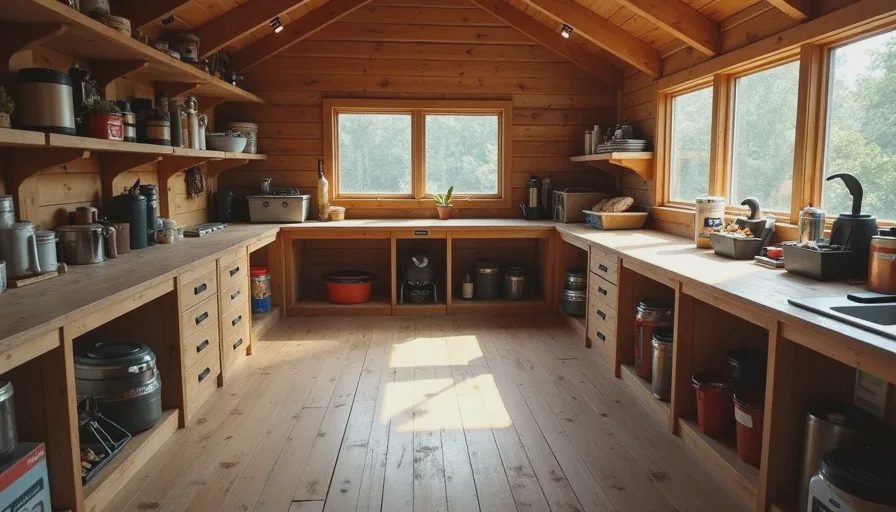
Final Base: Efficiency, Defense, and Long-Term Comfort
The final base is the one intended to carry the late game. Its job is sustained efficiency and resilience rather than rapid establishment.
Characteristics that matter at this stage:
Strong, maintainable defense matched to the highest regular threats the run will face.
High-throughput crafting and storage arrangements that support end-game material volumes.
Logistics that connect the main hub to key outposts or resource regions without excessive travel.
Enough quality-of-life features that long sessions remain tolerable, without those features having been forced into the earlier stages.
Final bases benefit from everything learned in the previous stages. Resource routes are already tested. Threat patterns are known. The layout can be designed around actual usage instead of guesses. This is the appropriate time for more refined defensive lines, specialized crafting rooms, and deliberate aesthetic choices—if the group wants them.
Building final-base features into the starter or midgame structure usually means paying the material and time cost twice: once too early, and again when the compromised layout is finally corrected.
Transition Rules That Prevent Waste
Moving between stages does not require abandoning everything. A few practical rules keep the material loss low:
Design the starter base so its core stations and sorted storage can be packed or rebuilt quickly.
Convert the old location into an outpost rather than deleting it when the main hub moves.
Upgrade in place only when the current location still scores well on the new resource and defensive filters.
Delay non-functional building (decoration, complex geometry, luxury rooms) until the stage that can afford it.
These rules turn base progression into a sequence of deliberate decisions instead of a series of forced rebuilds.
Solo and Co-op Differences
In solo play the transitions are easier to time because there is only one person’s attachment to the current location. The risk is emotional investment in an early base that no longer serves the run. The notebook checklist helps: if the location fails the current resource-distance or defensive test, the move is scheduled rather than postponed.
In co-op the same logic applies, but the group must share the decision. One player’s favorite starter spot can become a source of friction if the rest of the group is ready for a midgame relocation. A short shared evaluation against the current filters (resource access, defense, throughput) keeps the discussion practical instead of personal.
Clear ownership of the current base stage also helps. The group agrees whether they are still in “starter stabilization,” “midgame projection,” or “final efficiency” mode. That agreement guides how much time and material go into any new construction.
Common Patterns That Mix the Jobs
Certain habits reliably blur the three stages:
Adding decorative or complex walls to the starter base before the core loops are stable.
Forcing the original location to serve midgame resource distances by building ever-longer roads or portals without evaluating a better hub.
Designing final-base defensive depth into a midgame position that will still need to move.
Keeping all storage and crafting in one ever-expanding footprint long after specialized outposts would reduce travel.
Each of these patterns is understandable in the moment. Over a full run they produce the familiar feeling of having built a great deal while still lacking a clean, efficient main base.
A Practical Decision Sequence
When the current base starts to feel limiting, I run a short evaluation:
What job is the base actually performing right now (starter stability, midgame projection, or final efficiency)?
Which new problems have appeared that the current location cannot solve cleanly?
Does an upgrade in place fix those problems at acceptable cost, or is relocation cheaper?
What parts of the current base can be converted into outpost function instead of abandoned?
Only then schedule the construction or the move.
This sequence keeps emotion and sunk-cost bias from driving the decision. The base remains a tool for the current stage of the run.
Final Notes on Base Stages
Starter, midgame, and final bases are different tools. The starter buys time and stability. The midgame supports projection and higher throughput. The final base delivers sustained efficiency and resilience. Treating them as a single continuous building project forces early compromises into later stages and later complexity into early hours.
Separate the jobs. Build each stage for what it needs to do. Upgrade or relocate when the job changes. Convert what is still useful and leave the rest behind without regret.
Build what keeps you alive first. Let the base match the stage of the run, not the final image in your head.
No letters yet.